
Every way Stella makes a home run better
How each Ecostella product works, and the physics behind it. Every one stands on its own or pairs with the rest.
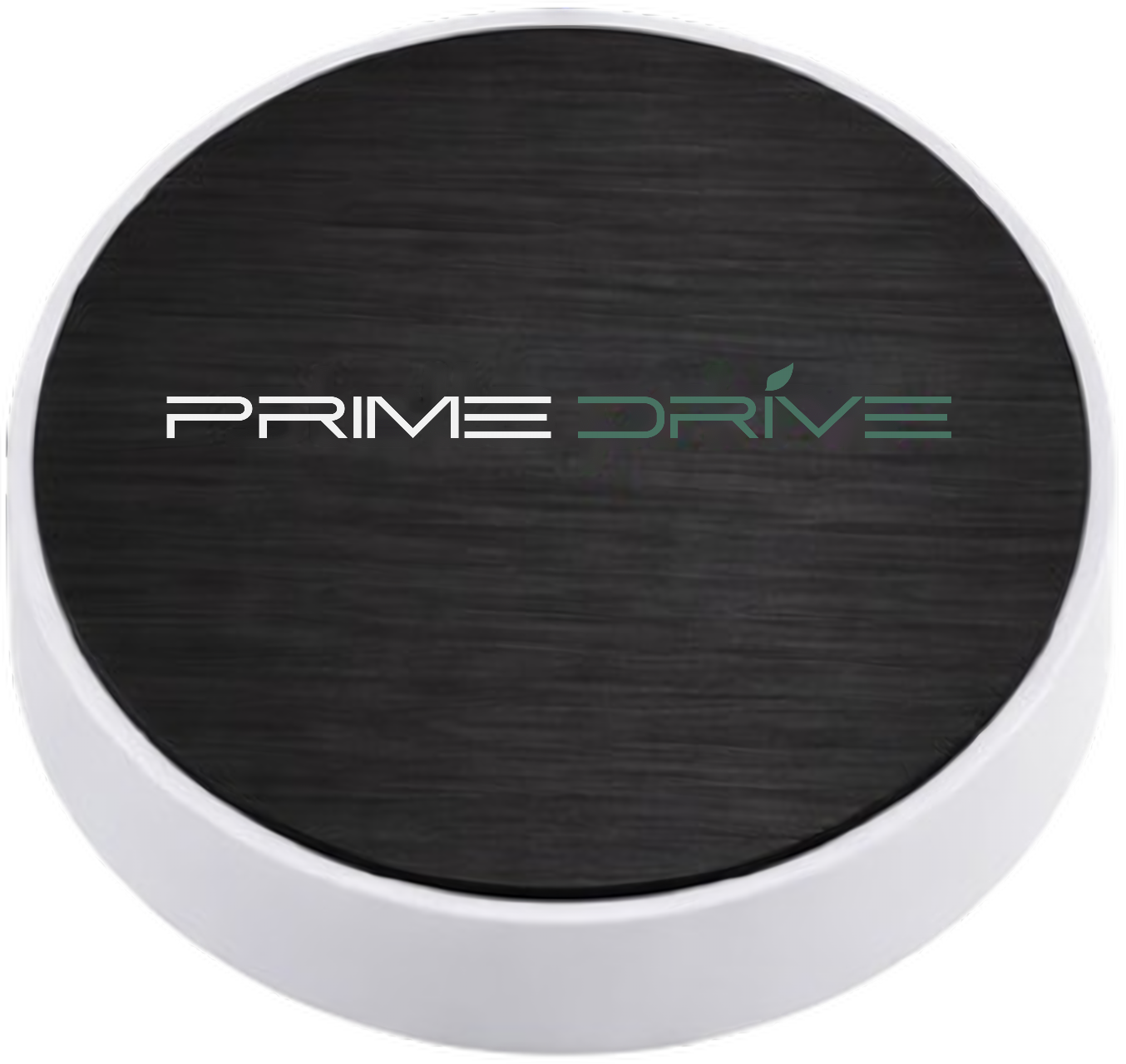
Prime Drive
Use the cooling you already paid for.
Prime Drive is a small 24-volt controller that sits between your thermostat and your heating and cooling system. Your thermostat still decides when the system runs. Prime Drive manages the timing of the fan and the compressor inside each cycle, and keeps the fan moving for a measured period after the compressor stops. The length of that period adapts to how long the system just ran.
How it works
An air conditioner cools by evaporating refrigerant inside the indoor coil, which pulls the coil far below room temperature. When the compressor shuts off, the coil and the refrigerant inside it are still cold. A standard system stops the fan at almost the same moment and leaves that stored cooling to warm up, unused, inside the cabinet.
Keeping the fan on a little longer moves room air across the cold metal until the two temperatures meet. The compressor draws most of the system's power and the fan draws a small share of it, so this last stretch of cooling costs very little to deliver. The same principle works in heating, where the heat exchanger stays hot after the heat source shuts off.
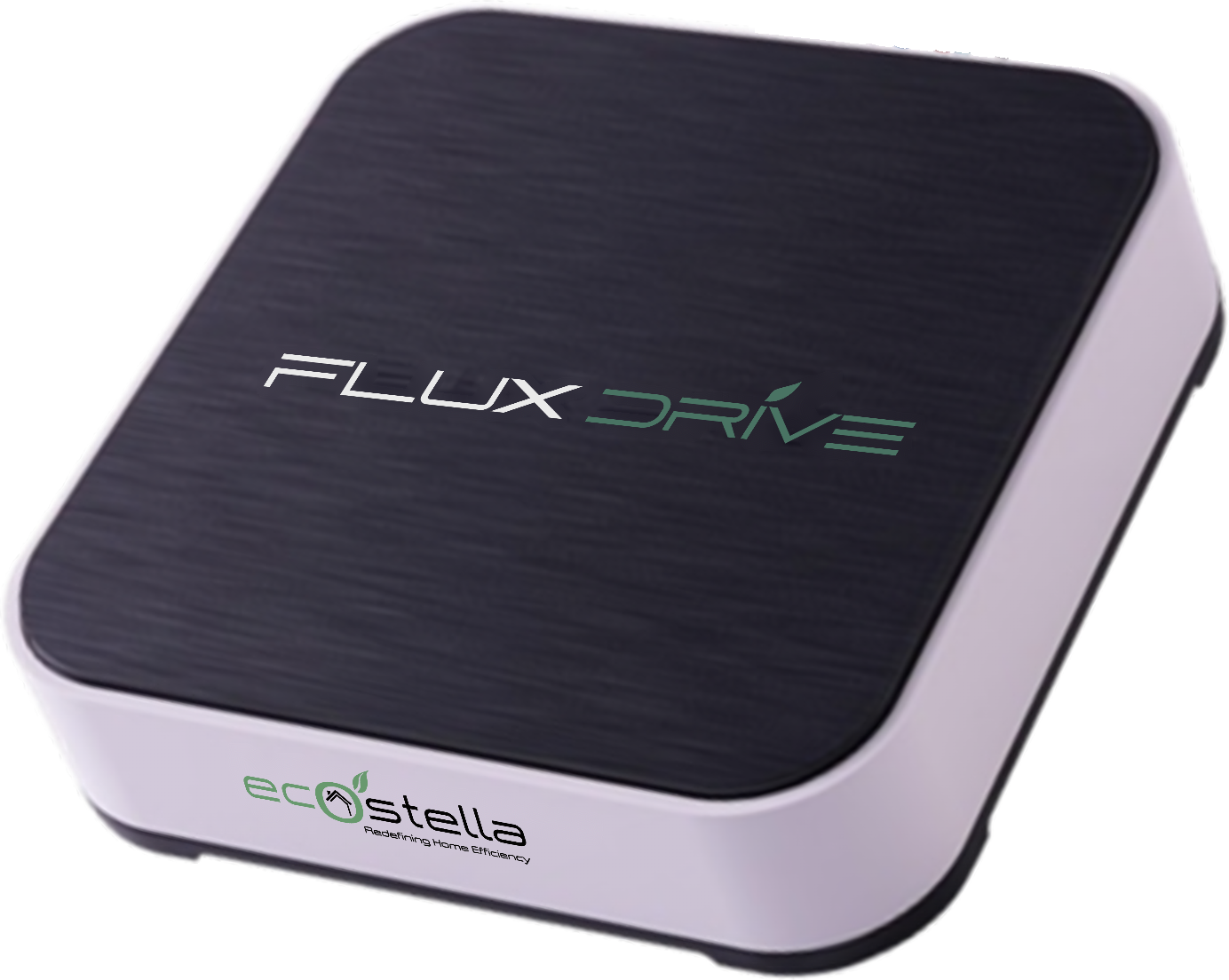
Flux Drive
The right fan speed for every moment.
Flux Drive mounts at the indoor fan motor. It brings the fan up gently at the start of each call for heating or cooling, then shapes fan speed across the cycle. Your thermostat stays in charge of when the system runs. Flux Drive decides how the fan runs.
How it works
Fans follow the affinity laws. Airflow rises in step with fan speed, but the power needed rises with the cube of speed. In an ideal fan, turning at 80% speed moves 80% of the air on about 51% of the power. Real motors recover less than the ideal curve, but the shape holds: the last few percent of speed are the most expensive.
The soft start matters too. A motor starting from rest briefly draws several times its running current. A gradual ramp eases that surge on the motor and its capacitor, and it takes the abrupt rush of air out of every start.
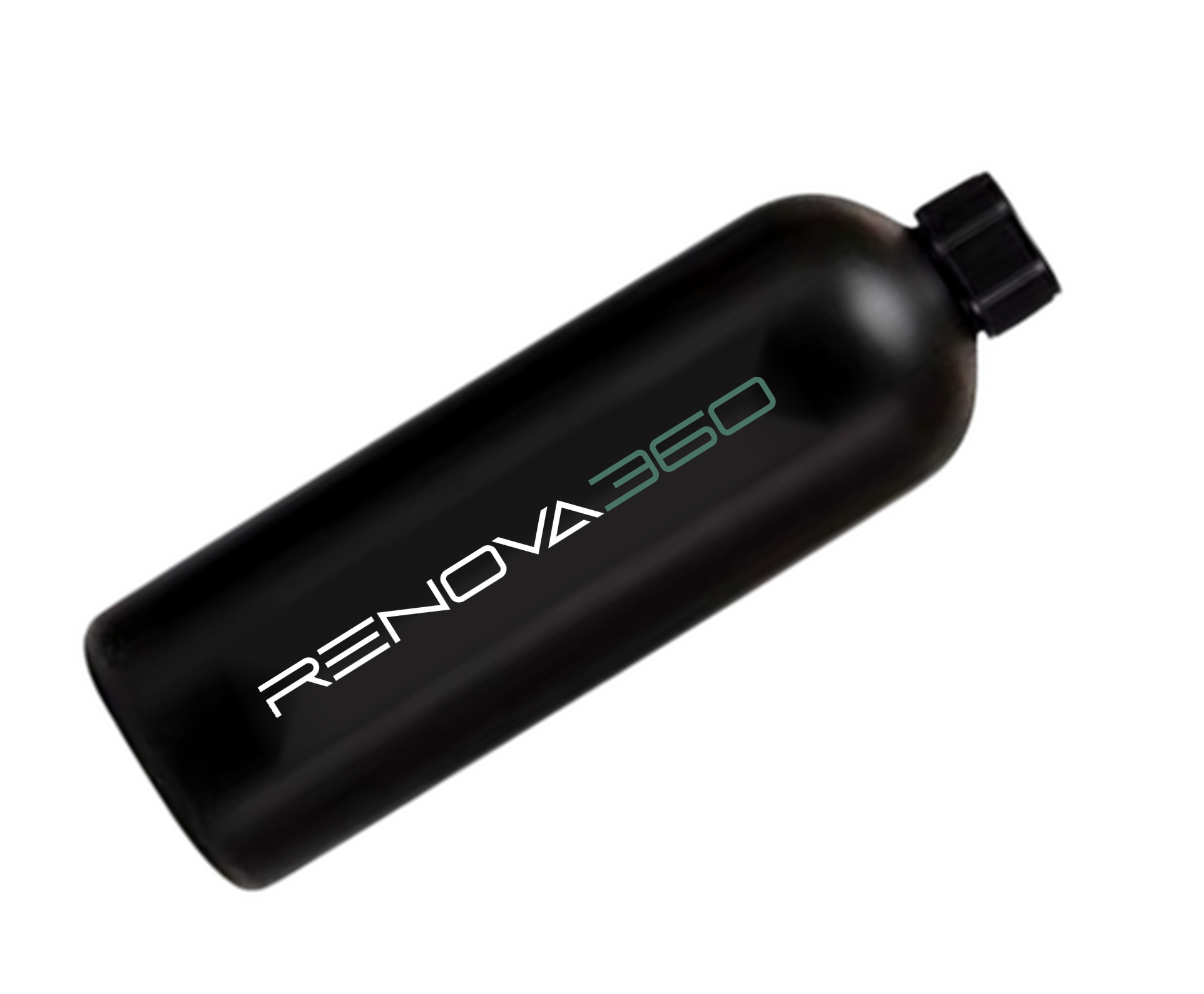
Renova360
A 360 degree refresh for the heart of your system.
Renova360 is a one-time treatment that a technician adds to the refrigerant circuit. It travels with the refrigerant and the compressor oil through the whole system. It is formulated to displace the oil film that builds up on the inner walls of the coils and to keep that film from forming again.
How it works
Every compressor carries a little of its lubricating oil out into the refrigerant lines. Over the years, some of that oil clings to the inside of the coil tubing. Heat has to cross from the refrigerant, through the tube wall, to the air, and each layer in that path adds thermal resistance.
Oil conducts heat far less readily than copper or aluminum, so even a thin film acts as insulation exactly where heat needs to move freely. With more resistance in the way, the system needs a wider temperature difference and a longer run to move the same heat. Clear the film and the refrigerant meets bare metal again.
Stella Vue
See where every kilowatt-hour goes.
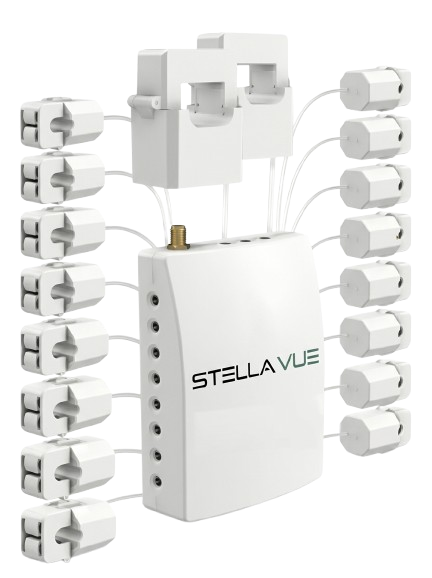
Stella Vue installs at the electrical panel. Small clamp-on sensors fit around the main lines and individual circuits, and the monitor reports usage to an app as it happens, with alerts when something runs longer or harder than it should.
How it works
Current flowing through a wire creates a magnetic field around it. Household current alternates, so that field is always changing, and a changing magnetic field induces a small, proportional current in a sensor coil placed around the wire. This is Faraday's law of induction, and it lets each sensor measure a circuit without touching the conductor.
Multiply current by voltage, account for the timing between the two, and you have power in watts. Add up power over time and you have energy in kilowatt-hours, the unit on your bill. Seen circuit by circuit, a single monthly total becomes a picture of what is running, when, and for how long.
StellaCare and StellaCare+
Keep the system you own at its best.
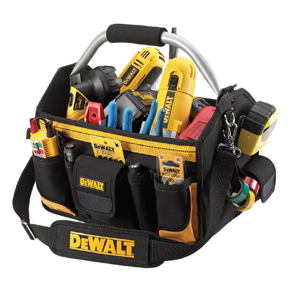
StellaCare is a full system tune-up. A technician cleans, inspects and measures your equipment against the way it is meant to run. StellaCare+ is the ongoing plan, with that same tune-up twice a year.
How it works
A heating and cooling system moves heat with two things: airflow and refrigerant. Dust on a filter or an indoor coil narrows the air path, so less air crosses the coil and less heat moves with each pass. A dirty outdoor coil sheds heat poorly, which raises the pressure the compressor has to work against.
A refrigerant charge that has drifted from specification changes the temperatures at which the refrigerant boils and condenses. Each of these changes is small and gradual, and none of them trips an alarm. Measuring temperatures, pressures and airflow is how they are found and corrected.
AeroVena
Seal the leaks no one can reach.
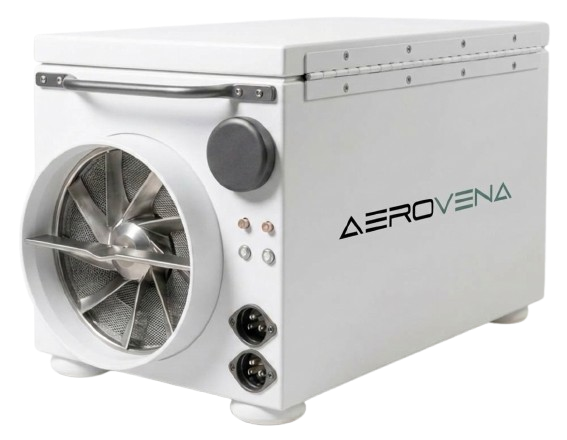
The registers are covered and the duct system is gently pressurized. A fine mist of sealant is released into the ducts. The only way out is through the leaks, so the escaping air carries the particles straight to them. They collect at the edges of each gap and build until it closes. Leakage is measured before and after, so the result is a number you can read.
How it works
Air flows through an opening in proportion to its area and to the square root of the pressure across it. Supply ducts run at higher pressure than the attic or crawlspace around them, so every gap pushes conditioned air out of the house. Leaks on the return side do the reverse and pull hot, dusty air in.
The sealing process puts that same pressure difference to work. Particles small enough to stay airborne follow the airflow, and the air speeds up and bends sharply as it squeezes through a leak. The particles cannot turn as tightly as the air does, so they strike the edge of the opening and stay there.
Stella Aire
Light that keeps the coil clean.
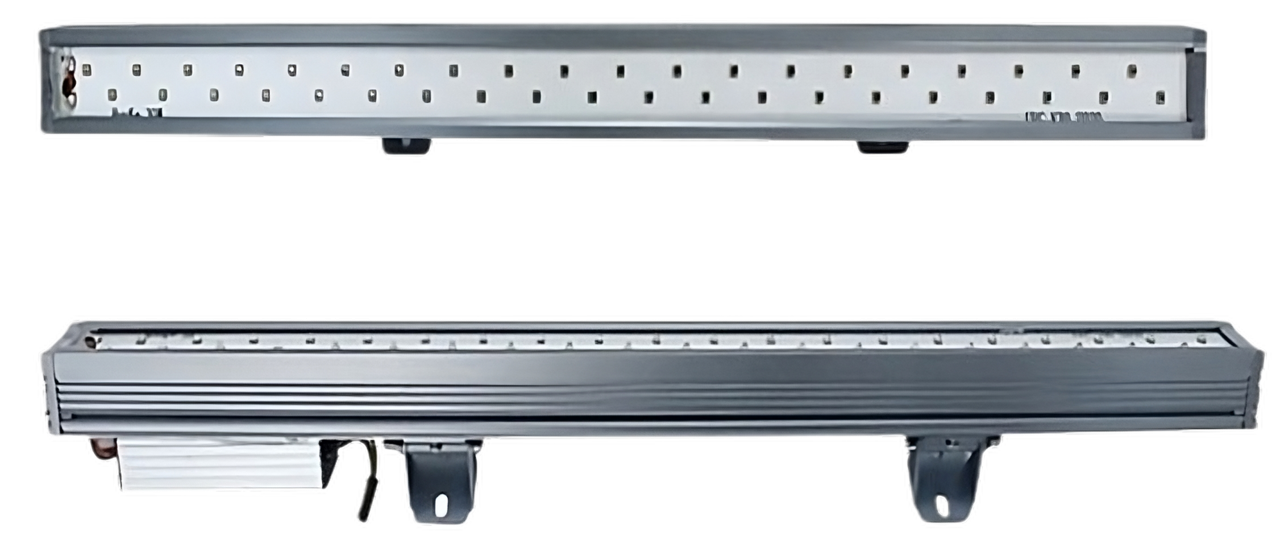
Stella Aire is a UVC LED light bar mounted inside the air handler, facing the indoor coil. The coil is cool, dark and damp, which is where growth takes hold. The light bar bathes the coil surface and the passing air in ultraviolet light at about 265 nanometers.
How it works
Ultraviolet light in the UVC band is absorbed by DNA and RNA. The absorbed energy fuses neighboring bases in the genetic strand, and an organism with enough of that damage can no longer copy itself. Absorption peaks close to 265 nanometers, which is why that wavelength is used.
The effect depends on dose: light intensity multiplied by exposure time. Inactivation follows a steady pattern. A given dose stops about 90% of a population, the same dose again stops 90% of what is left, and so on. The dose required differs from one organism to the next. A coil surface sits under the light continuously, so its dose keeps adding up.
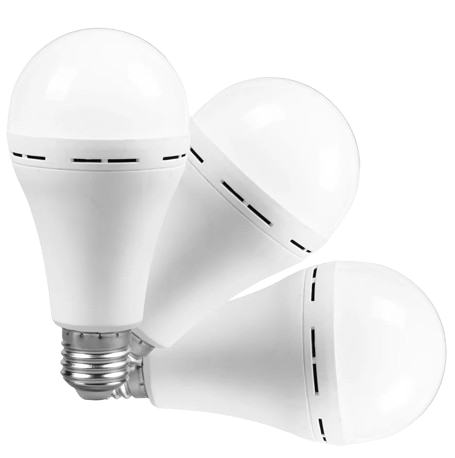
Nova Lite
Light that stays on when the power goes out.
Nova Lite bulbs fit ordinary fixtures and work with ordinary switches. Each bulb carries its own rechargeable battery, which charges while the light is in use. When the power goes out, the bulb can run from that battery. They come in a pack of ten.
How it works
An incandescent bulb makes light by heating a wire until it glows, and about nine tenths of its electricity leaves as heat. An LED works differently. Inside a semiconductor chip, electrons drop to a lower energy state and release that energy directly as light. A phosphor coating turns the chip's blue light into a warm white.
Because so little energy is lost as heat, an LED gives the light of a 60 watt incandescent bulb on about 9 watts. That low demand is also what makes a built-in battery practical. A cell small enough to fit inside a bulb can carry a load that size.
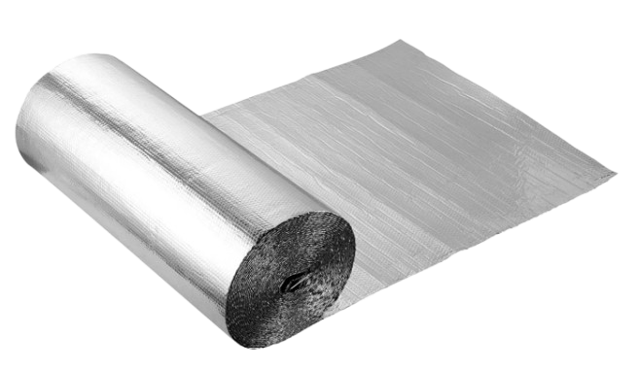
Nimbus
Turn the sun's heat back at the roofline.
Nimbus is a reflective foil barrier installed across the full attic envelope, facing an open air space. It does not soak up heat and slow it down the way insulation does. It turns radiant heat back before that heat reaches the insulation and the ceiling below.
How it works
Heat moves three ways: conduction, convection and radiation. On a summer afternoon a roof deck runs far hotter than the air outside, and it radiates that heat downward as infrared energy. The Stefan-Boltzmann law says the energy a surface radiates depends on its temperature to the fourth power and on its emissivity, a rating from 0 to 1 of how readily it emits.
Wood and most building materials sit near 0.9. Aluminum foil sits near 0.05. Between a 150°F roof deck and a 95°F surface below it, the law gives about 190 watts per square meter for bare wood and about 12 for a foil surface. Insulation still handles conduction. The barrier takes on radiation, and it needs that open air space on its reflective side to do it.
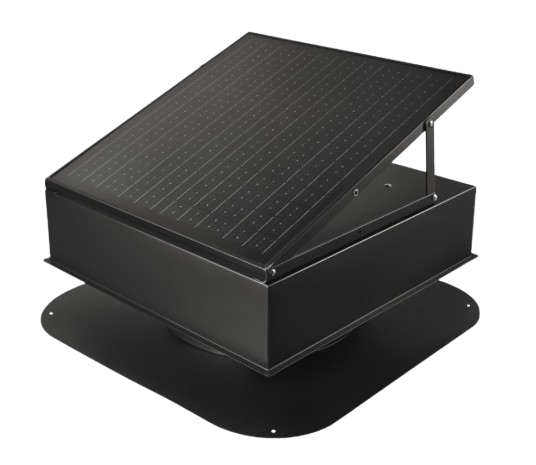
AeroVent
Powered by the same sun that heats the attic.
AeroVent is a roof-mounted attic fan with its own solar panel. It needs no wiring to the home and adds nothing to the electric bill. When the sun is on the roof, the fan pulls hot air out of the attic and draws outside air in through the attic's intake vents.
How it works
A solar cell converts sunlight directly into electric current, and the current rises with the intensity of the light. The fan's output therefore follows the sun across the day: light in the morning, strongest when the sun is high. The attic heats on nearly the same schedule.
The heat a moving airstream carries away depends on how much air moves and on how much hotter that air is than the air replacing it. Ventilation does the most good when the attic is at its worst. A cooler attic means less heat pressing down through the ceiling and around any ductwork that runs through the space.
Coming soon: StellaPura
Whole-home water filtration, for cleaner water at every tap in your home.
COMPANY
CUSTOMER CARE
CUSTOMER CARE
NEWS
LEGAL


© Copyright 2026. EcoStella. All Rights Reserved.